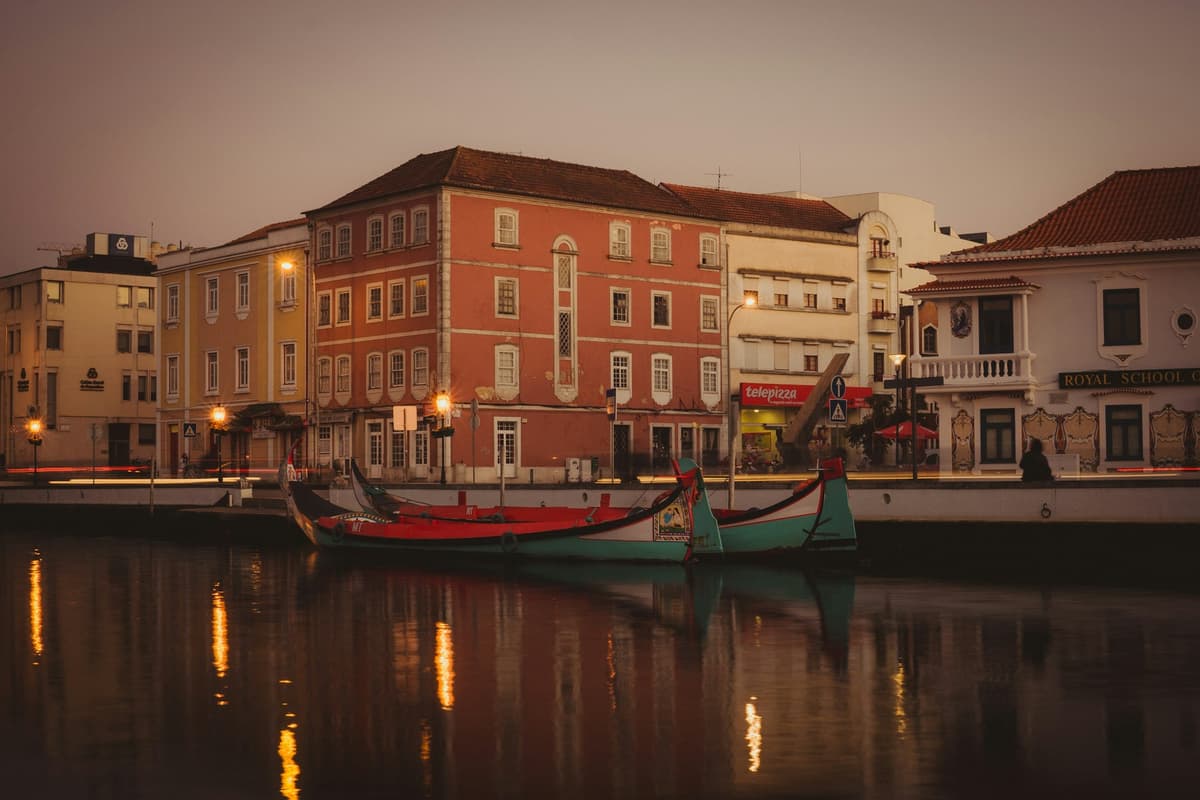
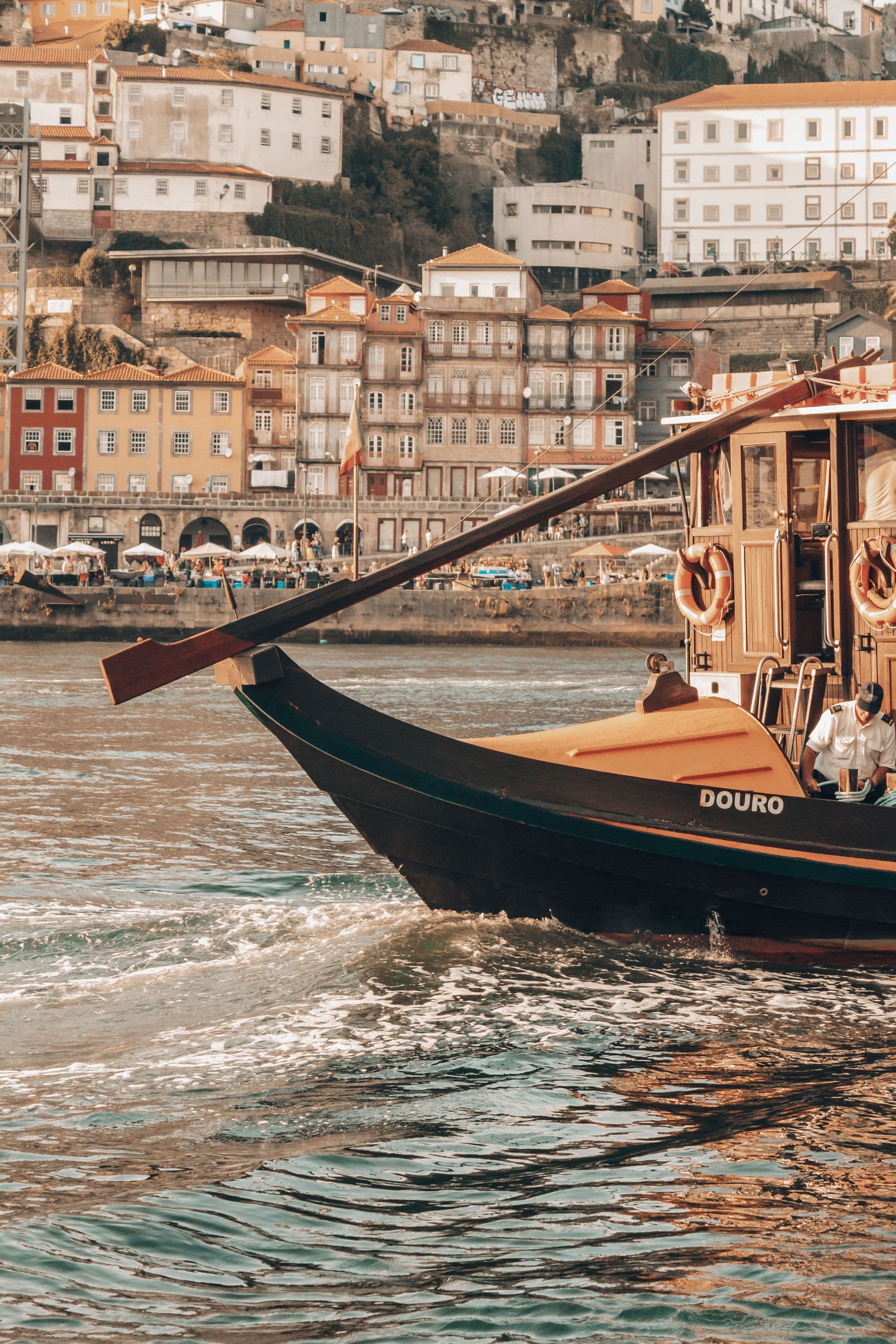
You will notice the rabelo boats before you know what they are.
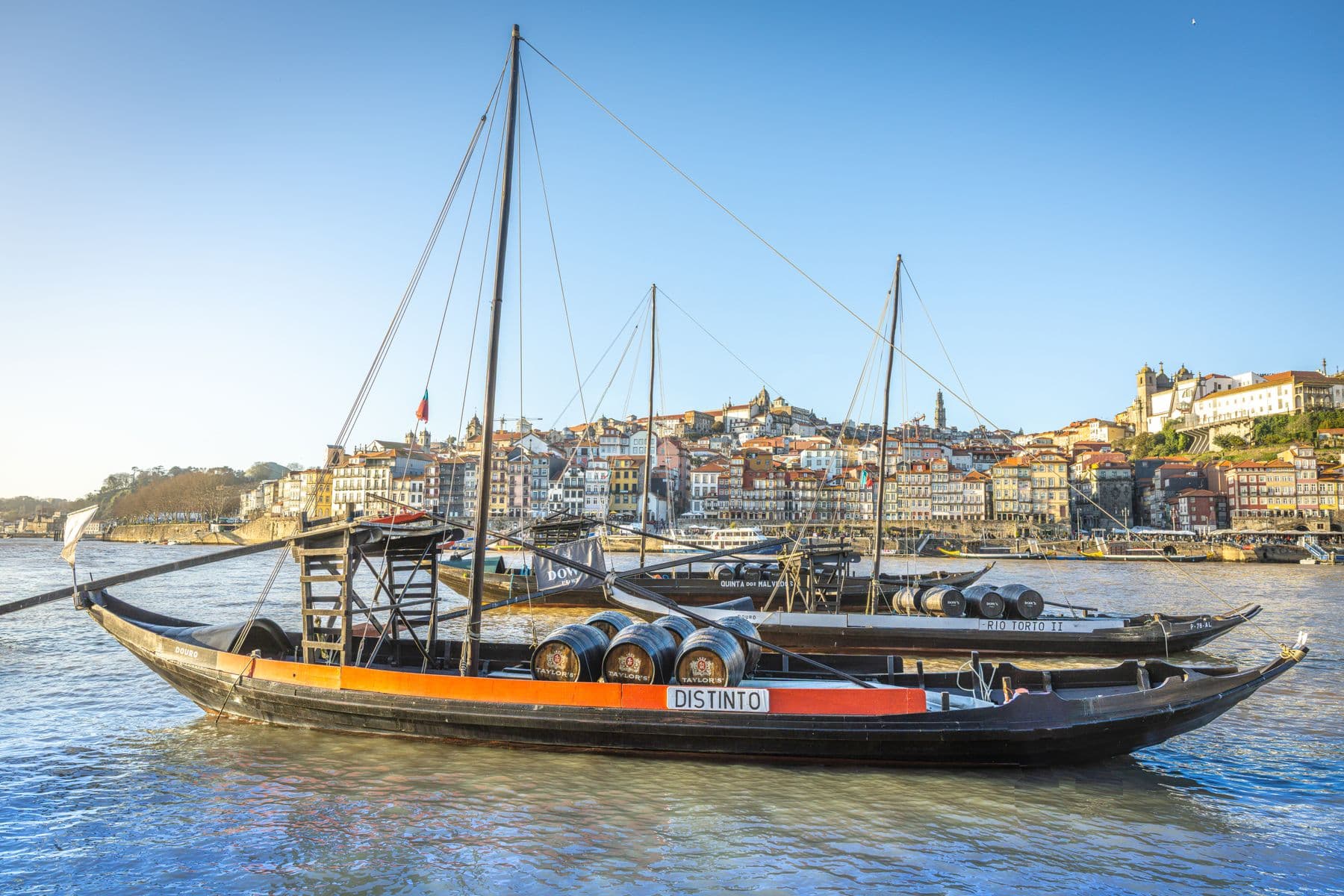
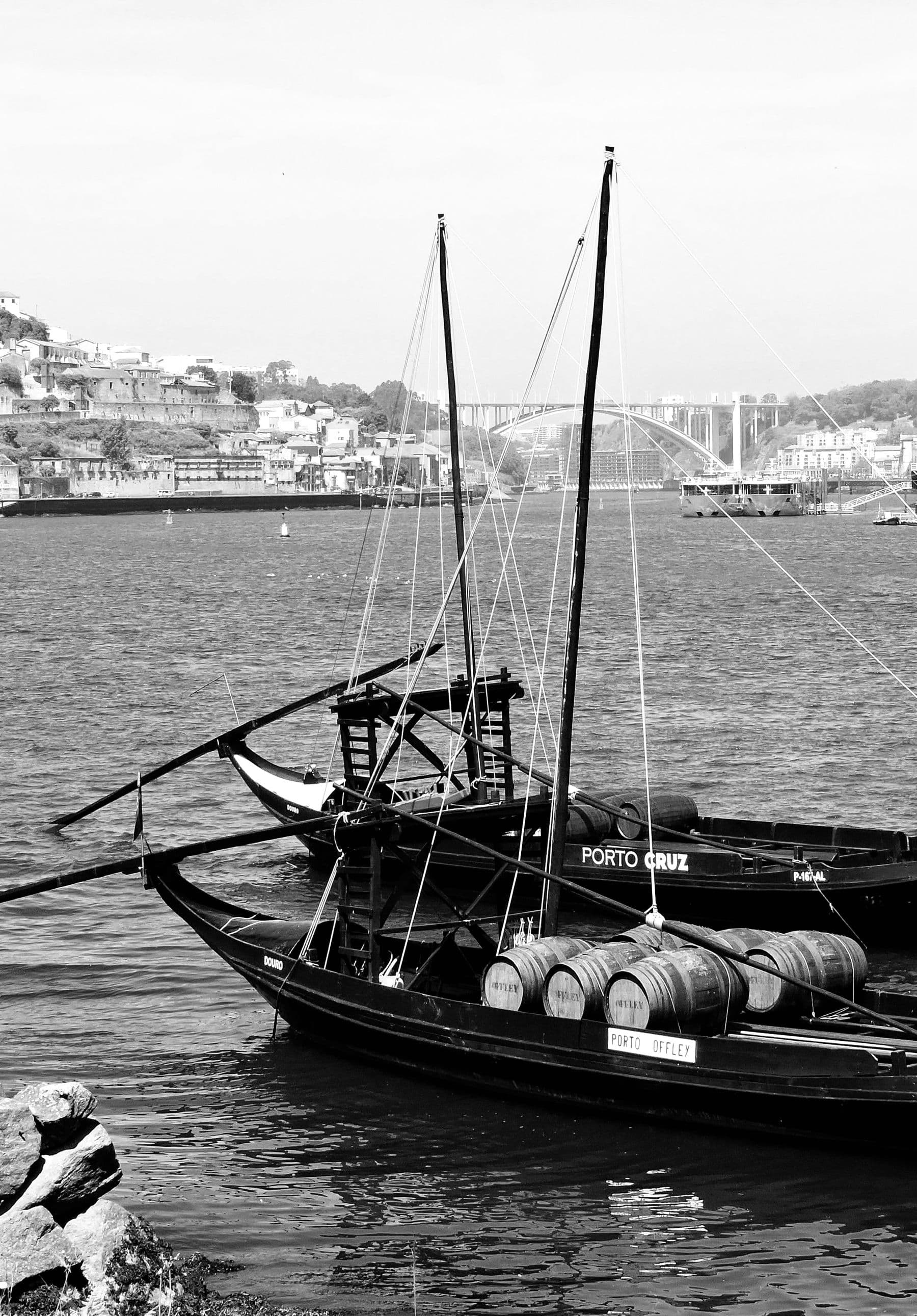
They sit along the Gaia waterfront with large Port wine names painted across their sails and look as though someone has deliberately arranged them for photographs.
These boats were once working vehicles.
For centuries, rabelos carried wine from the Douro Valley towards the Port wine warehouses around Vila Nova de Gaia.
Today you can still see original boats moored beside the river, while motorised replicas carry visitors on sightseeing cruises.
Thankfully, the modern version involves considerably less negotiating with dangerous river rapids.
What is a rabelo boat?
A rabelo is a traditional flat bottomed boat associated with the Douro.
Its shape was designed for navigating the river before dams transformed conditions along the waterway.
The most distinctive features include the shallow hull, large square sail and a long steering oar at the stern.
Historically, boats carried barrels of wine downriver from the Douro wine region towards Gaia.
The journey was difficult enough that looking at a calm modern Douro gives you a slightly misleading impression of the job.
There were rocks, currents and sections that demanded serious river knowledge.
Nobody was casually checking Google Maps.
Why did rabelo boats transport Port wine?
The vineyards producing Port were far upriver in the Douro Valley.
Gaia became the main centre for storing and ageing the wine before export.
Rabelos connected the two.
As railway and road transport improved and dams changed the Douro, the commercial role of the boats disappeared.
Sources documenting the modern rabelo tradition place the end of regular wine carrying voyages around the early 1970s.
The boats survived because by then they had become inseparable from the visual identity of Port wine.
Where can you see rabelo boats today?
The easiest place is Cais de Gaia.
Walk along the waterfront beneath the Port wine lodges and you will see boats carrying the names of different wine houses.
You do not need a ticket.
For a photograph with Porto behind them, the Gaia side is much better than Ribeira.
The upper level of Dom Luís I Bridge also gives you an excellent view from above.
From there the boats look rather small.
This may be comforting if you are about to board one.
Can you ride on a real rabelo?
Tourist cruises use motorised replicas or modern boats inspired by rabelos.
The original wine carrying boats are not operating normal passenger services.
That distinction sometimes gets lost in booking descriptions.
If you see “traditional rabelo cruise”, expect the shape and style of a rabelo with a modern engine doing the actual work.
Honestly, I am fine with that.
Historical authenticity becomes slightly less romantic when you are depending on nineteenth century propulsion to return you to dinner on time.
What cruise should you take?
The most common option is the Six Bridges Cruise.
It takes around 50 minutes and runs along the Douro through Porto and Gaia.
Operators including Douro Acima and Tomaz do Douro operate versions of this route using rabelo style boats.
Several other companies operate from Gaia.
The route is broadly similar, so I would focus on departure location, boat type and booking terms rather than spending an hour trying to identify a mythical “best” operator.
How much is a rabelo boat cruise?
Standard Six Bridges trips currently cost around 18€ to 20€ per adult, depending on company and departure point.
The typical journey is around 50 minutes.
That is enough.
A rabelo is a lovely place to spend part of an afternoon.
I am not convinced it needs to become your permanent address.
The Rabelo Boat Regatta
There is one day when the traditional boats become much more than waterfront decoration.
Every 24 June, during Porto's São João celebrations, the Port wine houses take part in the Regata de Barcos Rabelos.
The 2026 edition was the 42nd regatta and started at 11:30 on 24 June. The Confraria do Vinho do Porto organises the event.
The boats race along the Douro towards Dom Luís I Bridge.
If you happen to be in Porto during São João, it is one of the best opportunities to see the rabelo as something alive rather than a museum object.
Where should you watch the regatta?
The Gaia waterfront gives you easy access to the finish area and excellent views of the boats approaching Dom Luís I Bridge.
You can also watch from the Porto side.
Get there well before the start because São João is not exactly Porto's quietest day of the year.
The entire city appears to have made plans.
Usually involving plastic hammers.
Are rabelo boats worth seeing if you do not take a cruise?
Absolutely.
Walk the Gaia waterfront after visiting a Port cellar and you will naturally pass them.
They are part of the landscape.
A cruise adds the experience of being on the river, but I would not say you need one purely to understand what a rabelo looks like.
The boats are not shy.
Useful answers
Porto FAQ
They transported Port wine barrels from the Douro wine region towards Vila Nova de Gaia.