Aveiro is one of the easiest places to visit from Porto without renting a car.
Direct trains leave from São Bento, the journey takes a little over an hour on the urban service, and the station is close enough to the centre that you can start exploring immediately. CP currently includes Aveiro as one of the five main lines in the Porto urban network.
That makes it a very low effort day trip.
No tour bus.
No motorway.
No standing in a car park wondering whether you remembered which level you left the rental car on.
Aveiro is compact enough for one day and different enough from Porto to make the journey worthwhile.
Porto to Aveiro by train
For most visitors, I would take the train.
The direct urban service runs between Porto São Bento and Aveiro, with Campanhã also served along the route. Current timetable information places the direct São Bento to Aveiro journey at roughly one hour and seven minutes.
You do not need a reserved seat for the urban train.
Buy the correct ticket before boarding and check the current CP timetable on the day.
If you are staying around Ribeira, Baixa or Clérigos, leaving from São Bento is especially convenient.
There are faster long distance trains from Campanhã, but for a simple day trip the direct urban service from the city centre is difficult to beat.
Start with Aveiro station
Aveiro gives you something to look at before you have even properly arrived.
The old railway station beside the modern station is covered with 59 azulejo panels showing regional landscapes, professions and local scenes. The building now also works as a tourism and interpretation space.
Take five minutes to look at it before walking towards the centre.
It is a much better introduction to the city than immediately opening Google Maps and staring at the blue dot.
Walk towards the canals
From the station, Avenida Dr. Lourenço Peixinho leads towards Aveiro's central canals.
This takes around 15 to 20 minutes at an easy pace.
Aveiro is famously connected with the Ria de Aveiro, and water shaped much of the city's identity.
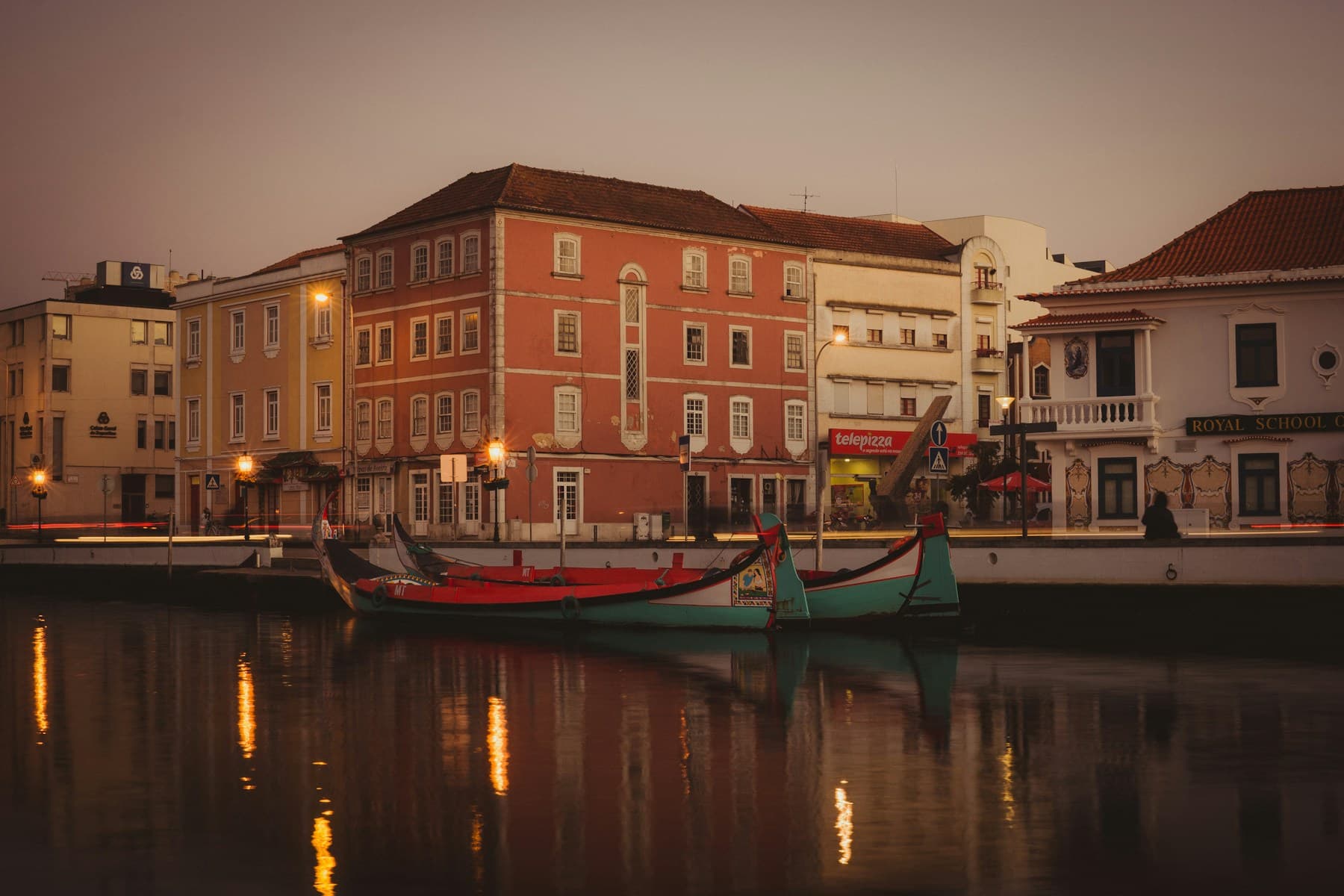
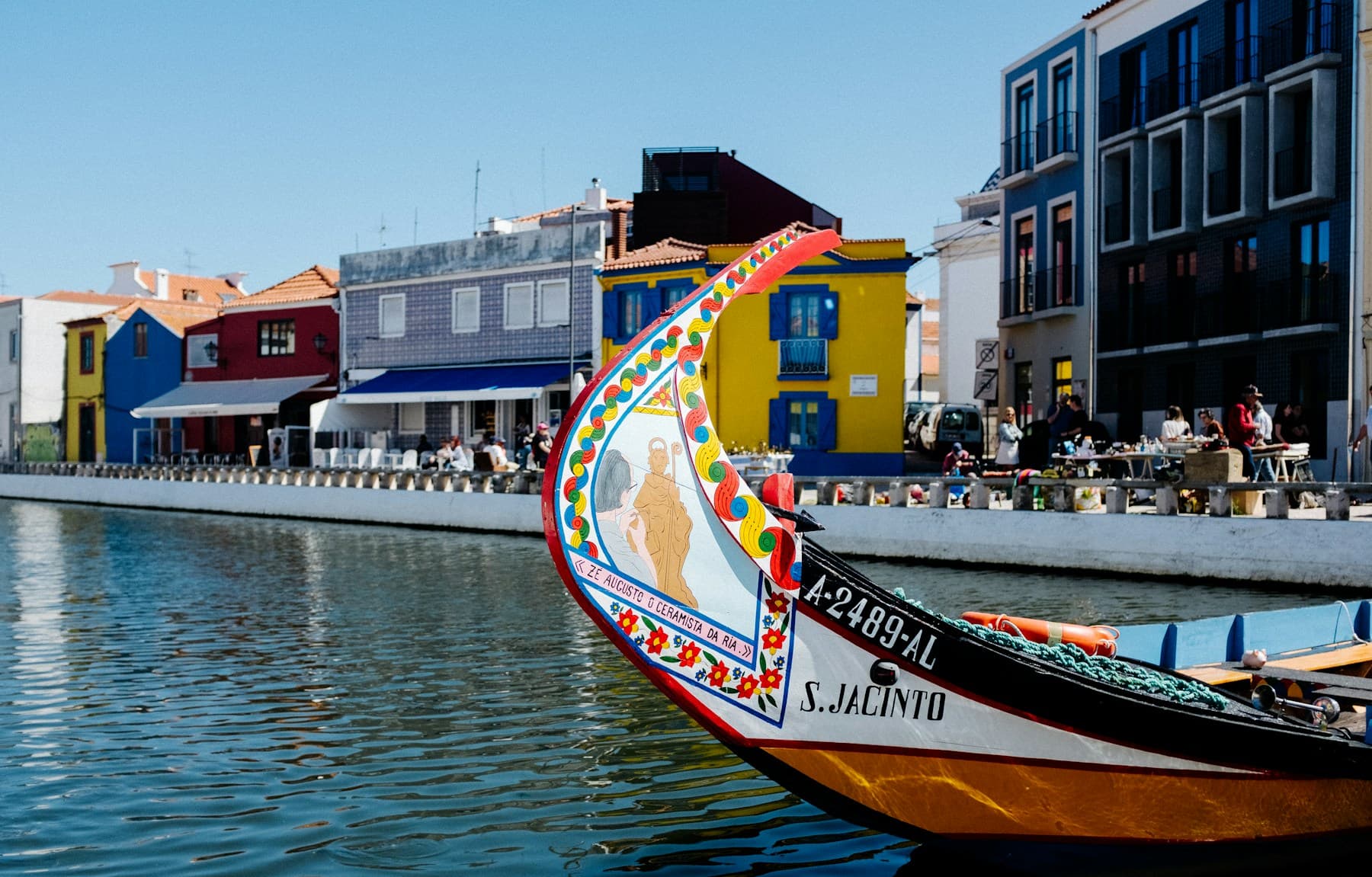
The colourful boats you see on the canals are called moliceiros.
Historically they were used around the lagoon for collecting moliço, aquatic vegetation used in agriculture.
Today, their working life is significantly less demanding.
They mostly carry visitors around while being photographed.
Career progression, I suppose.
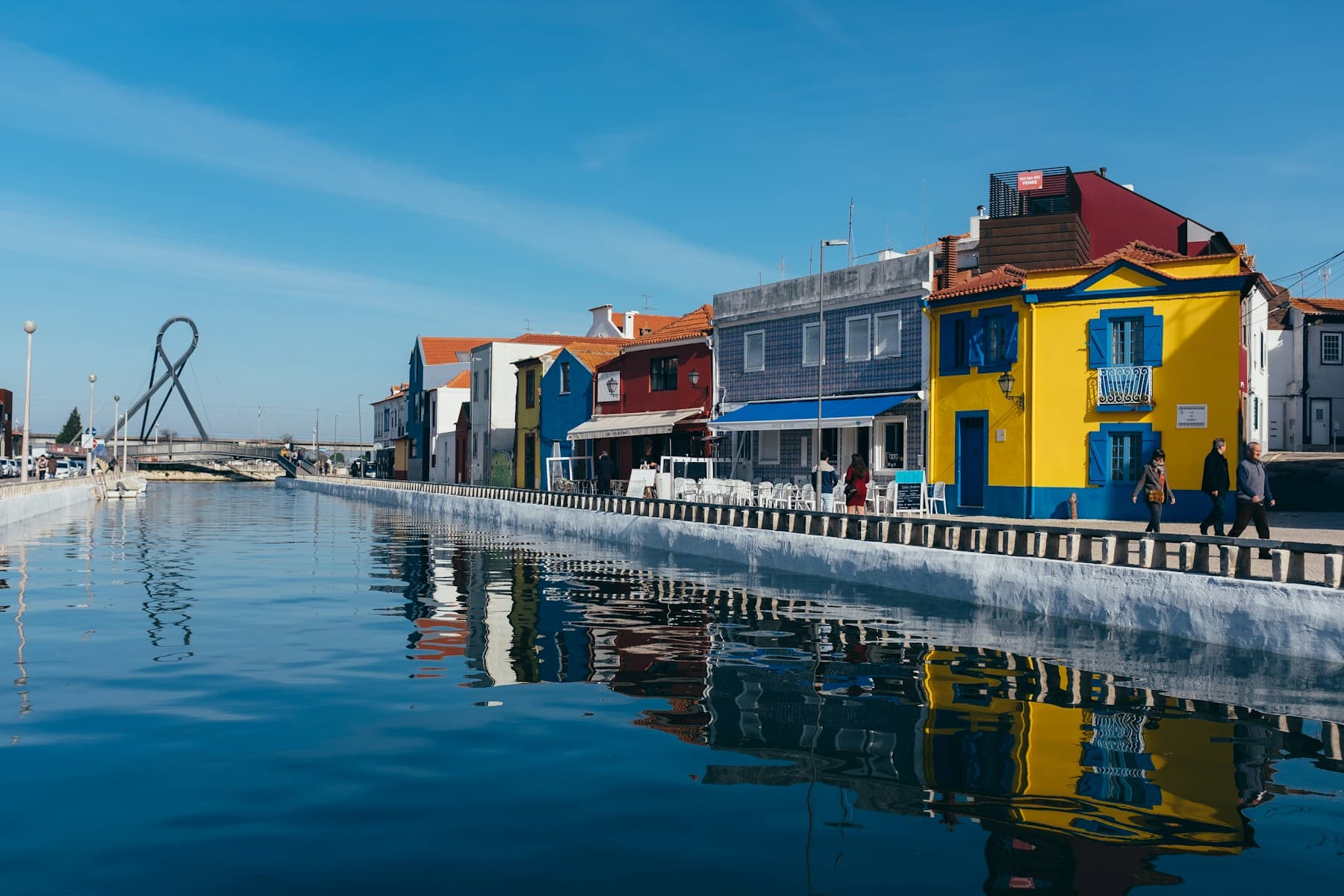
Should you take a moliceiro ride?
For a first visit, yes.
It is touristy, but it gives you a different view of the Art Nouveau façades and canals and does not take up a huge portion of the day.
I would not describe it as a Portuguese version of Venice.
Aveiro does not need the comparison, and Venice probably has enough to deal with already.
Treat it as its own small canal city.
See Aveiro's Art Nouveau architecture
One of the most interesting things about central Aveiro is its collection of Art Nouveau buildings.
The Museu Arte Nova occupies one of the city's strongest examples, a house built between 1907 and 1909.
The city museum currently identifies 28 elements along Aveiro's wider Art Nouveau route, so the collection extends well beyond the museum itself.
Walk around Rua João Mendonça and the streets beside the canals and you will start recognising the curved windows, decorative tiles and floral details.
This is one of those rare cases where simply looking at buildings counts as an organised cultural activity.
Very efficient.
Try ovos moles
You cannot really discuss Aveiro without mentioning ovos moles.
The traditional sweet is made primarily from egg yolks and sugar and is often presented inside thin wafer shells shaped like fish, shells and other maritime forms.
Aveiro's municipal museums list ovos moles alongside salt and the moliceiro as central elements of the city's identity.
Try one.
Then possibly another so you can verify the first result.
Scientific standards matter.
What else should you see?
If you enjoy museums, the Museu de Aveiro Santa Joana is one of the city's main cultural stops.
You can also visit the Museu da Cidade and the Art Nouveau Museum. Aveiro currently offers a combined museum ticket covering several municipal sites.
If the weather is good, I would spend more time outside around the canals and historic streets rather than trying to see every museum.
Aveiro works best at a slower pace.
What about Costa Nova?
Costa Nova, with its striped houses and Atlantic beach, is outside central Aveiro.
It is possible to add it to the same day, but you will need a bus, taxi or car.
I would only do this if you arrive early.
Otherwise, Aveiro itself easily fills most of the day without turning the trip into a transport challenge.
Is Aveiro worth a day trip from Porto?
Yes.
The train is direct, the centre is compact and the city feels noticeably different from Porto.
I would put the Douro Valley ahead of Aveiro if you only have one spare day.
If you have two or three days available for trips outside Porto, Aveiro becomes a very easy choice.
Useful answers
Porto FAQ
The direct urban train from Porto São Bento takes roughly one hour and seven minutes under current schedules.