If Braga is about churches and Bom Jesus, Guimarães is about medieval streets, castles and the beginnings of Portugal.
It is known as the Berço de Portugal, the cradle of Portugal, because of its close connection with Afonso Henriques and the events surrounding the formation of the Portuguese kingdom.
Its historic centre has been UNESCO listed since 2001, and the Couros Zone was added to the World Heritage area in 2023.
You can get there directly from Porto by train.
That makes Guimarães another day trip where owning a car adds very little.
Porto to Guimarães by train
Direct CP urban trains run between Porto São Bento and Guimarães.
Current schedules put the journey at roughly one hour and ten to fifteen minutes, depending on the service. Trains also pass through Campanhã.
For a day trip, São Bento is ideal because you can leave directly from the historic centre of Porto.
Check the current timetable before travelling.
Frequency is generally good enough that you do not need to build your entire day around one specific train.
A refreshing concept after dealing with some rural European transport.
Walk into the historic centre
Guimarães railway station is south of the old centre.
From there, walk towards Largo do Toural and continue into the UNESCO area.
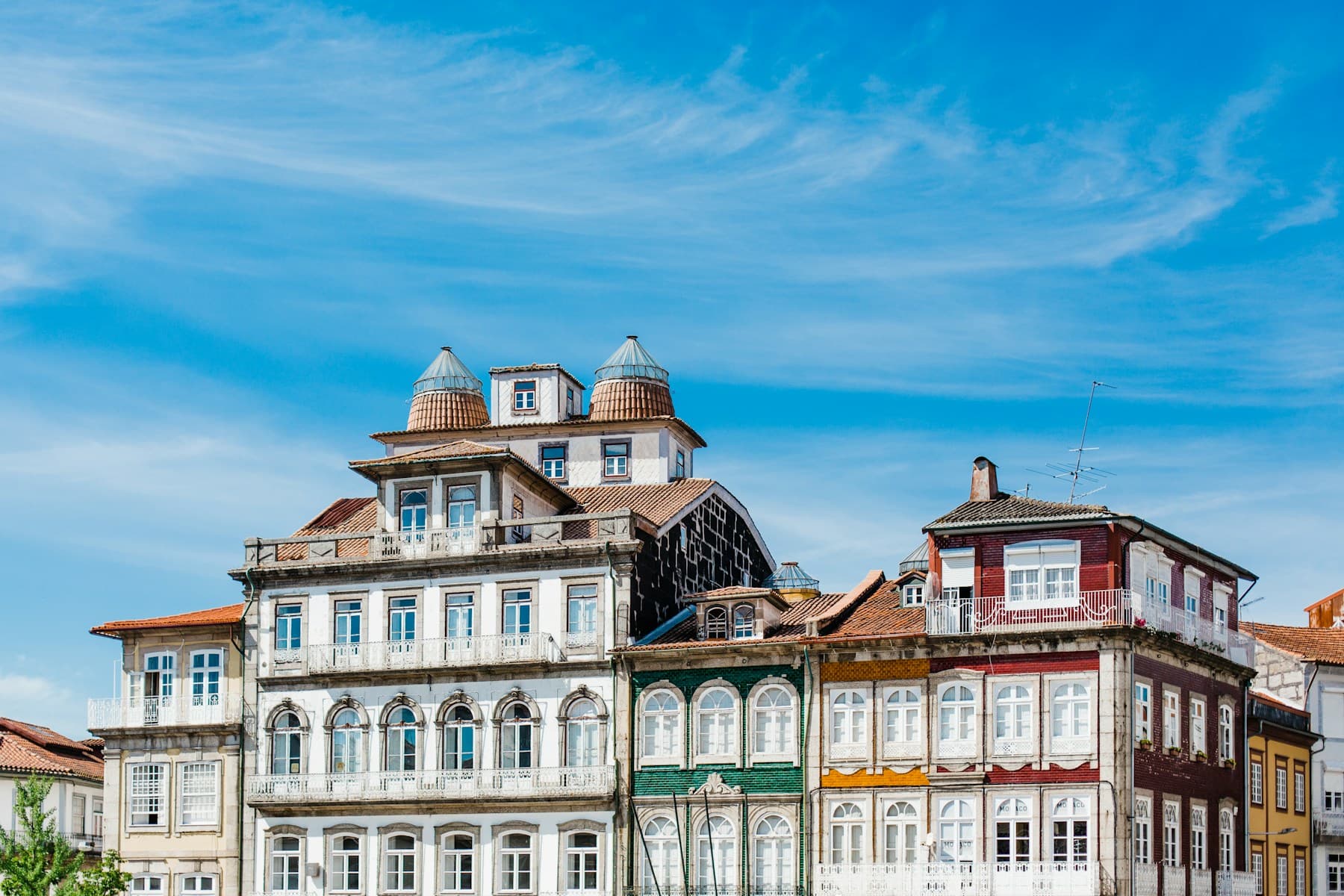
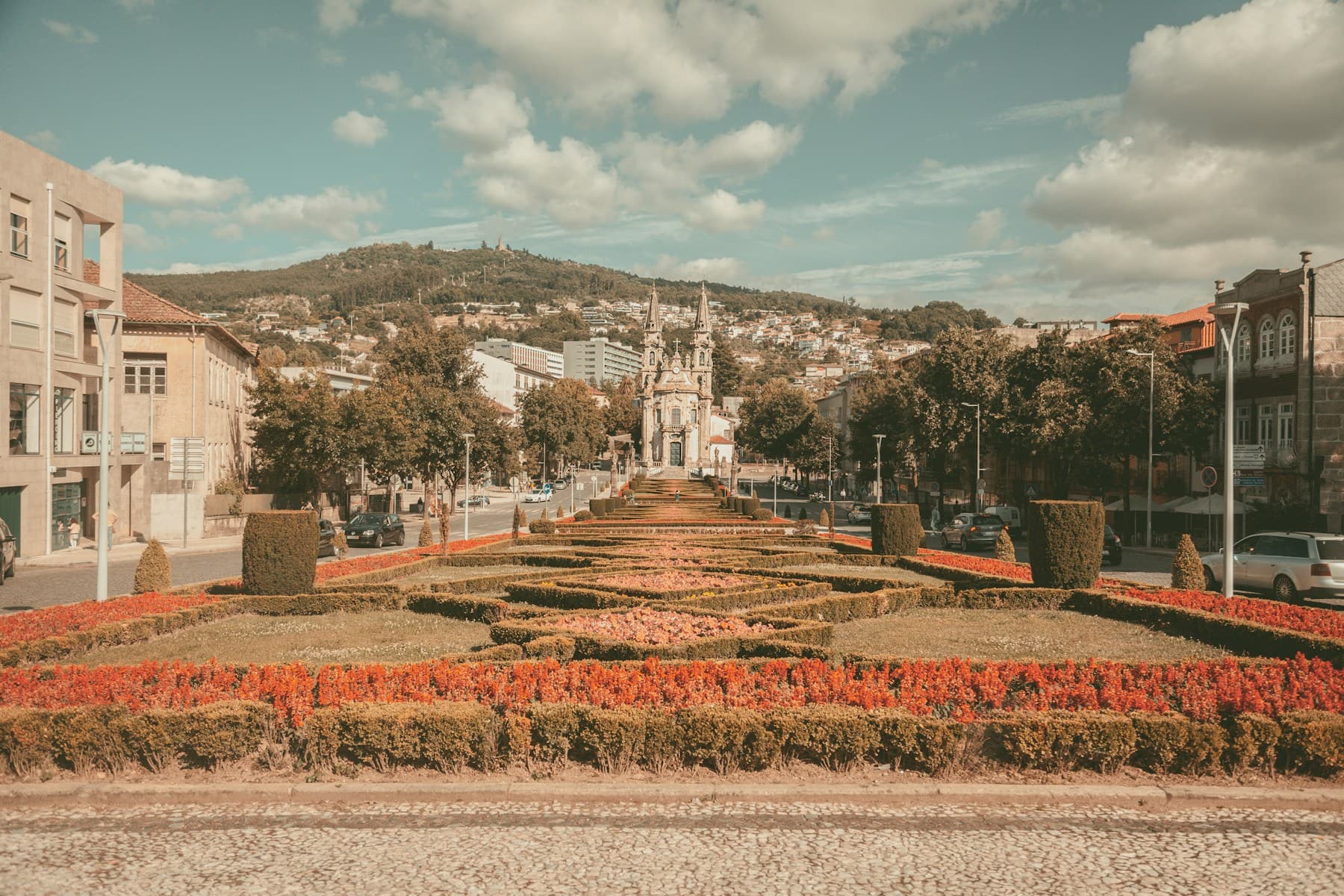
The centre is compact, pedestrian friendly and remarkably well preserved.
You will quickly reach Largo da Oliveira and Praça de São Tiago, two of the most attractive squares in the city.
This is where I would slow down.
Guimarães is not a place where you need fifteen separate attractions to justify the trip.
The streets themselves do quite a lot of the work.
Visit the Palace of the Dukes
Continue uphill towards the monumental area known as the Colina Sagrada.
The first major stop is the Paço dos Duques de Bragança.
The palace dates from the fifteenth century and today contains decorative arts, furniture, weapons and copies of important Flemish tapestries. Its distinctive roof is topped by dozens of tall brick chimneys.
I would go inside.
The exterior is impressive, but seeing the enormous rooms makes the scale of the building much clearer.
Walk to Guimarães Castle
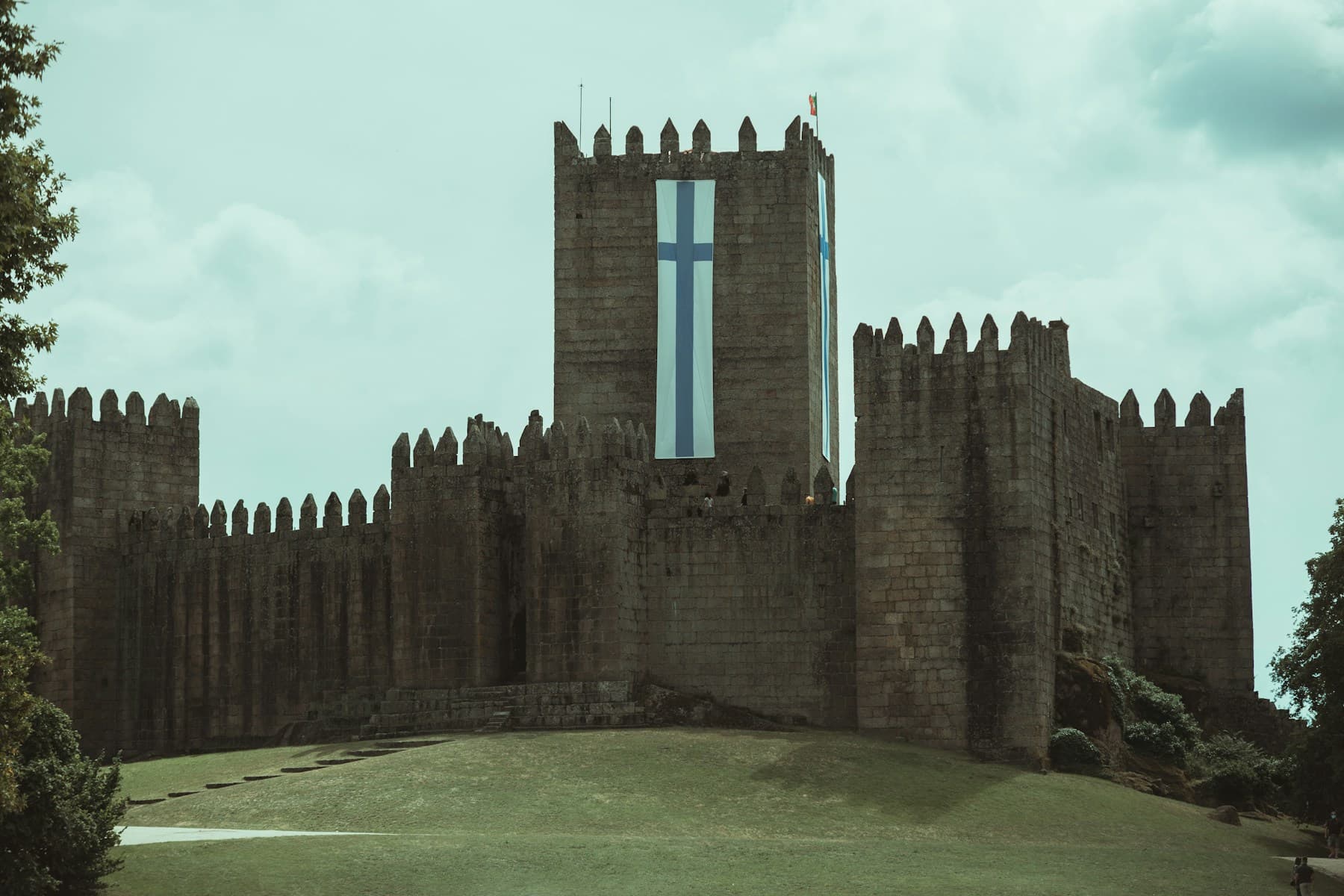
The castle is only a few minutes away.
Its origins go back to the tenth century, when Countess Mumadona Dias ordered the construction of a defensive structure to protect the nearby monastery.
The site later became closely associated with Afonso Henriques and the foundation story of Portugal.
The castle itself is not enormous.
That is good news if you already spent the morning climbing Porto's hills before catching the train.
Visit the walls and keep some time for the surrounding grounds.
Do not rush lunch
Return to the historic centre for lunch.
The streets around Largo da Oliveira and Praça de São Tiago have plenty of restaurants and terraces.
Yes, these are central tourist areas.
No, that does not automatically mean every restaurant is an international crime against gastronomy.
Look at recent menus and choose somewhere that serves regional food.
A glass of Vinho Verde also makes geographical sense here.
I am always supportive of educational drinking.
What about Penha?
If you have extra time, Monte da Penha rises above Guimarães and offers wide views over the region.
It requires extra transport from the centre, so I would not prioritise it on a rushed half day trip.
For a full day, it can be a nice final stop before returning to Porto.
Personally, I would rather spend the first visit slowly around the historic centre and castle area.
Penha will not be offended.
Braga or Guimarães?
Choose Guimarães if you want medieval streets, a castle and the origins of Portugal.
Choose Braga if your priorities are churches, Bom Jesus and a larger urban centre.
Guimarães feels slightly easier to absorb in one day.
The historic centre is extremely compact and the main monuments sit close together.
If you have two free days, do one city each day.
Trying to do Braga and Guimarães in five hours may technically be possible.
So is eating three francesinhas.
Neither is something I feel compelled to recommend.
Is Guimarães worth visiting?
Absolutely.
It is one of the easiest places to understand why Portugal places so much historical importance on the north of the country.
The buildings are well preserved, the train journey is simple and you can see the major sites without spending half the day in transport.
Useful answers
Porto FAQ
Allow roughly one hour and ten to fifteen minutes from São Bento, depending on the service.