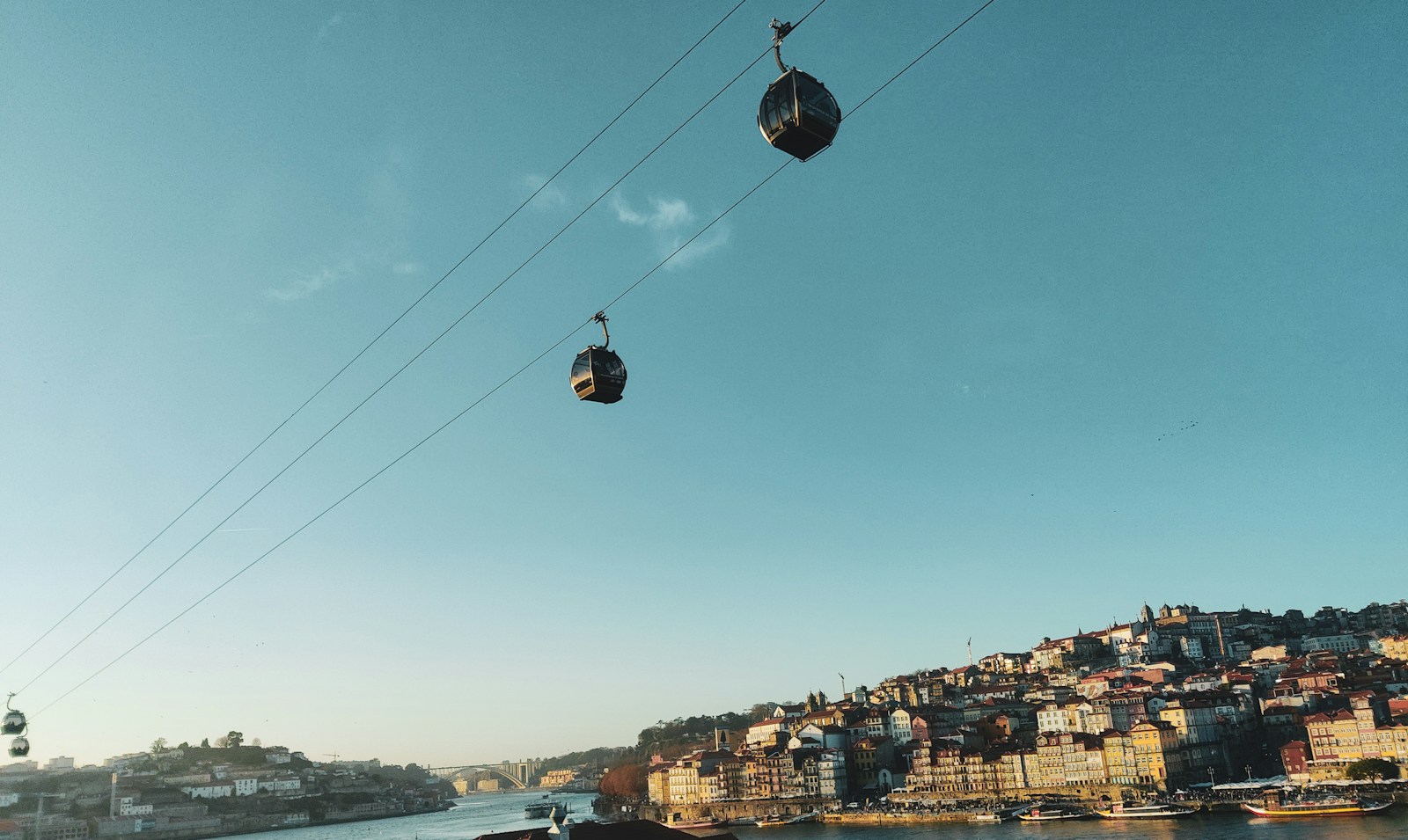

If you have time for one historic Porto tram, choose line 1. It follows the Douro from Infante, near Ribeira, to Passeio Alegre at the river mouth, so the journey itself is the attraction. Choose line 22 instead if you want a roughly 30-minute circuit of the central streets without travelling to Foz. Line 18 is useful when you want to start near Carmo and connect the upper city with Massarelos and Passeio Alegre.
All three routes are part of the current STCP historic tram network as checked on 21 October 2026. This matters because line 22 only returned in August 2026, after a long suspension, and line 18 regained its Carmo terminus in July. Older maps and travel posts can show a very different network.
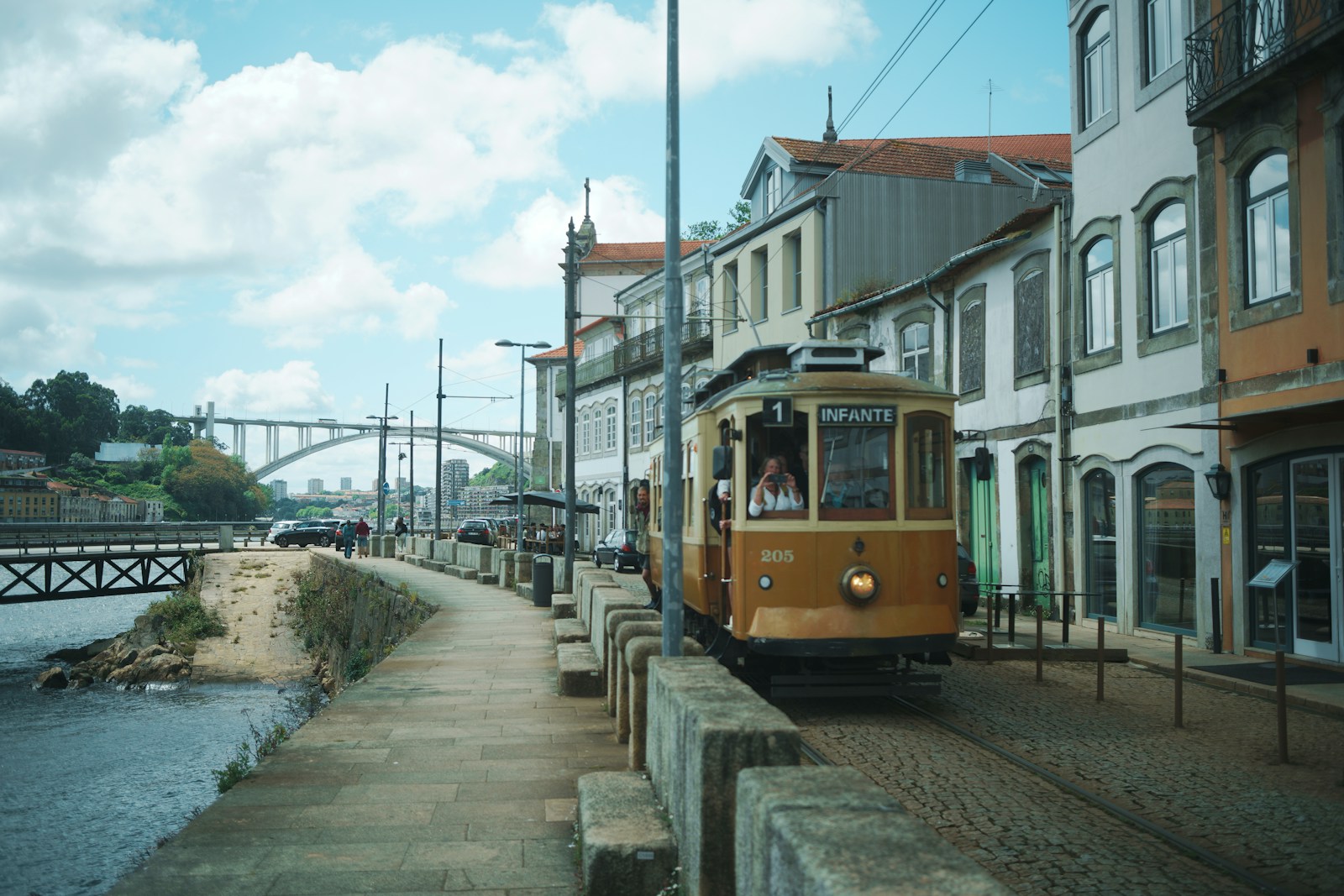
The trams are memorable, but a sightseeing ride is a poor substitute for a time-critical bus, metro or taxi journey. Before you queue, check the line's live service notice, confirm your ticket and decide where you want to end the ride. The photograph above shows a historic tram in Porto; it does not identify the specific service operating on your travel date.
Which Porto historic tram should you ride? At a glance
Pick the destination first. The three lines give different views rather than three versions of the same trip. Line 1 is the strongest first ride for scenery; line 22 keeps you in the centre; line 18 links those parts of the network and also works as its own ride. See STCP's announcement of the restored line 18 route and STCP's announcement of the reopened line 22.
| Line | Current route | Choose it for | Main limitation |
|---|---|---|---|
| 1 | Infante ↔ Passeio Alegre | Douro-side views and a Foz outing | Does not continue along the Atlantic beaches |
| 18 | Carmo ↔ Passeio Alegre | An upper-city start and a varied route | Less uninterrupted river scenery than line 1 |
| 22 | Carmo → Batalha → Carmo | A compact historic-centre circuit | No Foz or seafront section |
Is tram 1 the best historic tram in Porto?
For most first-time visitors, yes. Line 1 leaves from Infante by the western end of Ribeira and follows the north bank of the Douro towards Passeio Alegre. The river, quays, bridges and changing waterfront make it the most scenic single ride. The stop at Museu do Carro Eléctrico also makes the tram museum an easy addition if you want the history behind the vehicles.
The ride ends near the Douro mouth, not on the long Atlantic beachfront. From Passeio Alegre you can walk towards the lighthouse and on along Foz's coastal promenade, allowing extra time for the change from river to sea. If your aim is Praia de Matosinhos or a specific restaurant farther north, continue by another mode; line 1 does not go there.
STCP's published line 1 timetable gives roughly 25 minutes from Infante to Passeio Alegre, but allow more time for the wait, boarding and any disruption. If the outward service is busy, consider walking or using a bus one way and taking the tram back when it fits your day. Do not plan the last departure from a remembered blog timetable: operating hours vary by season. See the walk after arriving in Foz do Douro and STCP's line 1 stop-by-stop timetable.
When does tram 18 make more sense?
Choose line 18 when Carmo, the Clérigos area or a transfer between the upper city and the waterfront fits your plan. Since July 2026, it has again run between Carmo and Passeio Alegre, passing the Hospital de Santo António area and Massarelos. STCP describes a daily service about every 30 minutes; the exact departure times should be checked for your date.
Line 18 is not simply a shorter copy of line 1. Its appeal is the change in setting as it comes down from the historic centre and reaches the riverside. At Massarelos you can connect with line 1, although a connection can mean another wait and, for on-board tickets, another fare. If your only goal is the longest continuous Douro view, board line 1 at Infante instead.
The restored Carmo terminus is particularly handy when you have just visited the Carmo churches, Clérigos or Livraria Lello. It also makes a sensible route in the other direction after a Foz afternoon, provided there is a remaining service. Check where the final tram actually terminates: STCP's notice distinguishes the last full return from a later Carmo-to-Massarelos trip. See the restored line 18 route and ticket rules with STCP and the tram museum with other Porto museums.
Is tram 22 running, and who should ride it?
Yes. STCP brought line 22 back on 1 August 2026 after works for Porto's metro expansion had kept it off the tracks since November 2021. It now makes a circular journey from Carmo through the central area towards Batalha and back to Carmo. The operator describes the circuit as approximately 30 minutes, with a tram scheduled every 30 minutes.
This is the best choice if you are already around Carmo or Clérigos, want the feel of a vintage vehicle and have no plan to travel to Foz. The route passes central landmarks including Praça da Liberdade and Batalha. It is a city-street experience, not a river or ocean panorama. You can also use it to link central stops, but walking may be faster once the wait is included.
The return of line 22 changes the answer in older guides that call it permanently suspended. Even so, an operating route can still have a same-day diversion or interruption. Check STCP before setting out, especially when a specific stop or the last circuit matters. At Carmo, line 22 meets line 18; a further change at Massarelos reaches line 1. See STCP's line 22 route, duration and service notice.
How much is a Porto historic tram ticket?
STCP's 2026 notices list an on-board single fare of €6 for adults and €3.50 for children aged 4–12 on the restored lines 18 and 22. These are per-ride fares, so changing trams can change the cost. Contactless bank-card payment and MB Way are listed for the on-board ticket; confirm the current payment options with the driver if one method is essential to you.
A monthly Andante pass is a different case. STCP says monthly passes can be used on historic lines 1, 18 and 22 when the zones loaded cover the route, including PRT1 and PRT2 where required. That statement does not make an occasional Andante journey, an Andante Tour pass or every visitor ticket valid on the trams. For occasional travel, STCP directs passengers to the separate Porto Tram City Tour fare. Ask before boarding if your ticket type is uncertain.
Older STCP pages and PDFs list multi-ride or multi-day tourist products, but some also show the pre-August 2026 network. Because the current availability and terms of those products were not confirmed for this guide, use the verified single fare as your budgeting baseline and check any multi-ride option directly with STCP before buying it. See STCP's current FAQ on monthly passes and historic trams and Porto's other public transport tickets.
How should you fit a tram ride into a Porto day?
For a first ride with a Foz walk, start near Ribeira, board line 1 at Infante and get off at Passeio Alegre. Walk to the river mouth and along the seafront, then use a bus or taxi for the return if the tram queue or remaining schedule does not suit you. This keeps the tram as the experience rather than the only way back.
For a short centre-only day, use line 22 after visiting Carmo or Clérigos and step off near the part of the centre you want to explore next. You do not have to treat a full circle as compulsory; check the direction and stop before boarding. To sample more of the network, line 22 connects to line 18 at Carmo, and line 18 connects to line 1 at Massarelos, but budget both waiting time and fares for each change.
The vehicles have limited capacity, and queues can grow at popular termini in good weather. A published 30-minute frequency is the interval between scheduled trams, not a guarantee that you can board the first arrival. If you have a timed museum entry, train or restaurant booking, choose a faster transport option and ride the tram at a less pressured point in the day. See a realistic Porto itinerary around the tram ride and the STCP journey planner before travelling.
What should families and travellers with limited mobility know?
These are heritage vehicles, so do not assume the same boarding conditions as on a modern low-floor bus or metro train. If you need step-free boarding, space for a wheelchair or help with a pushchair, ask STCP about the exact tram and stop for your journey before buying a ticket. The operator's accessibility information focuses on its accessible bus fleet; it does not establish that every heritage tram is step-free.
With children, line 22's compact loop may be easier to fit around meals and rest stops; line 1 works better if Foz is already the day's destination. Keep boarding time, standing space and the wait in mind. The confirmed €3.50 child fare applies to ages 4–12, but check the current rule for a younger child rather than guessing from that bracket.
Finally, do not confuse the historic tram with Porto Metro. The modern train crossing the upper deck of the Dom Luís I Bridge is Metro line D; none of the historic lines 1, 18 or 22 crosses that bridge. And line 1 ends by the Douro mouth rather than following the Atlantic coast to Matosinhos. Those two mix-ups can send you to the wrong stop or leave an afternoon short of time. See STCP about accessibility for your specific journey and the Porto Metro map for the Dom Luís I Bridge route.
Useful answers
FAQ - Which Porto tram should you ride
Line 1 is the best choice for Douro-side views between Infante and Passeio Alegre. Line 22 stays in the centre, while line 18 mixes upper-city streets with a waterfront connection.