São Bento is both a working railway station and one of Porto’s easiest cultural stops. Its entrance hall displays large historical tile panels; you can appreciate them during a short stop without buying an attraction ticket.
The important distinction is that the tiled hall is not the same as a long-distance train terminal. Most intercity services use Campanhã, while São Bento remains useful for urban and regional rail connections.
São Bento Station at a glance
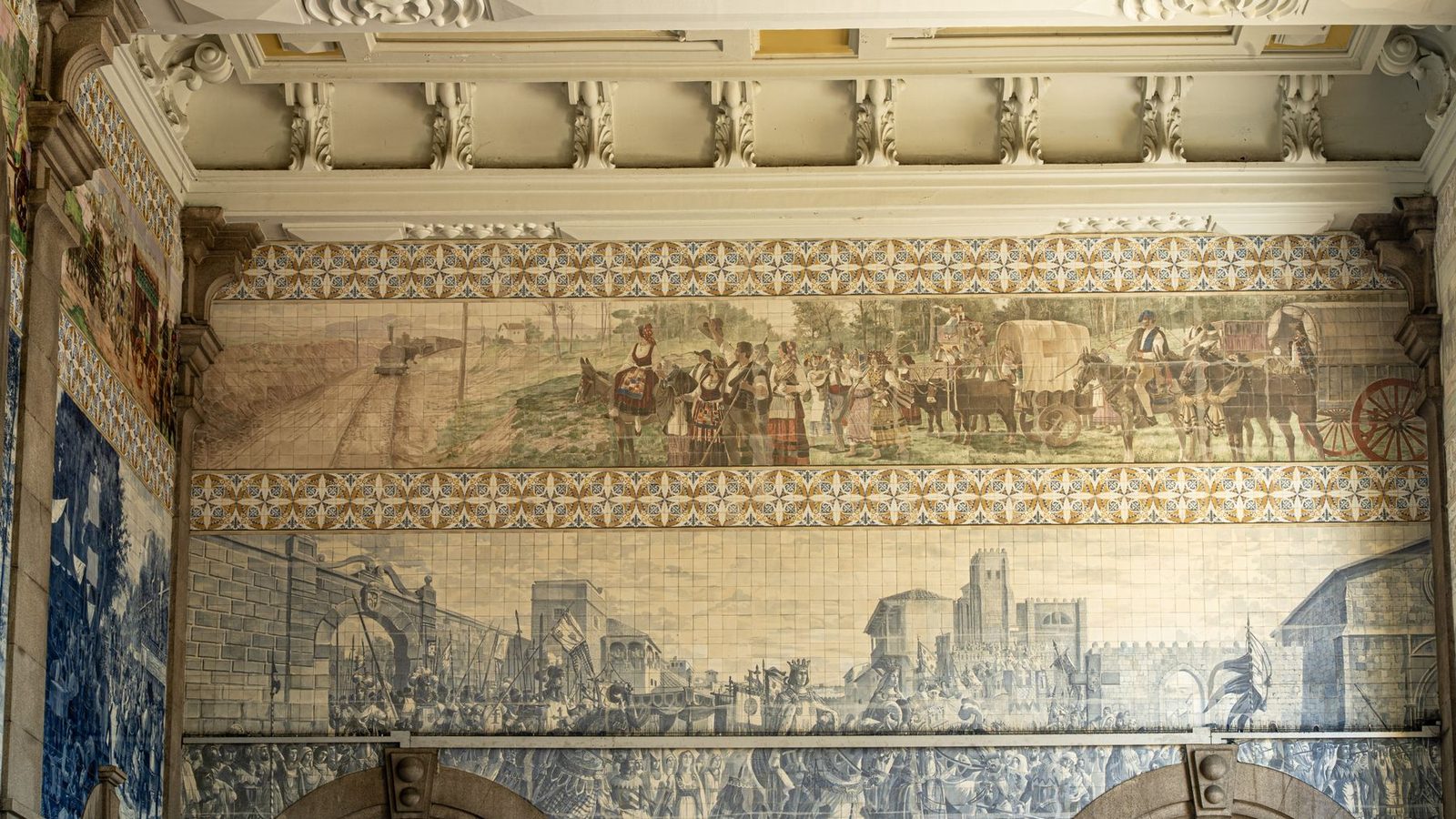
Visit Porto describes roughly 20,000 tiles by Jorge Colaço in the station hall. The building stands on the site of a former convent. The hall is an active entrance to platforms, so leave clear paths for travellers and check station notices if any area is temporarily restricted. See Porto’s São Bento station listing.
| Question | Practical answer |
|---|---|
| Admission to tile hall | No separate attraction ticket normally needed |
| Best for | A short architecture and tile stop in central Porto |
| Suggested time | About 15–20 minutes for the hall |
| Train role | Working station for urban and regional services |
| Nearby | Aliados, Sé Cathedral and Rua das Flores |
What do São Bento’s tiles show?
The walls contain monumental scenes of Portuguese history, with smaller images of transport, everyday life and rural traditions. They reward more than a quick glance: take a moment to separate the large narrative panels from the decorative bands that connect them.
The hall’s impact depends on seeing the whole room, not only taking a close-up of one wall. Stand to one side where you can look across the space without blocking people moving toward departures. Morning light and crowd levels vary, so there is no reliable promise of an empty photograph. See Official Visit Porto background on São Bento tiles.
Is São Bento Station free to visit?
The station hall functions as a public railway space, and no separate museum admission is normally required simply to see the tiles. Guided city tours may charge for their interpretation, but the hall itself is not a ticketed attraction in the way that a palace or tower is.
Respect working-station rules. Platform access, photography equipment and temporary security measures can be regulated differently from casual entry to the hall. If staff direct visitors away from an area, follow those instructions. See Other free and paid Porto attractions.
Can you catch trains from São Bento?
Yes, but check the exact train type and destination. São Bento serves urban and some regional journeys; Porto’s main long-distance terminal is Campanhã. A ticket naming Porto-Campanhã is not a reason to go to São Bento without checking the connecting service.
If you are arriving from Lisbon, your long-distance train usually reaches Campanhã first. Urban trains connect on into the centre, but the transfer and ticket conditions depend on the service you bought. Keep your booking handy and follow the platform information rather than assuming every Porto station is interchangeable. See Lisbon to Porto train and arrival guide and Porto transport payment guide.
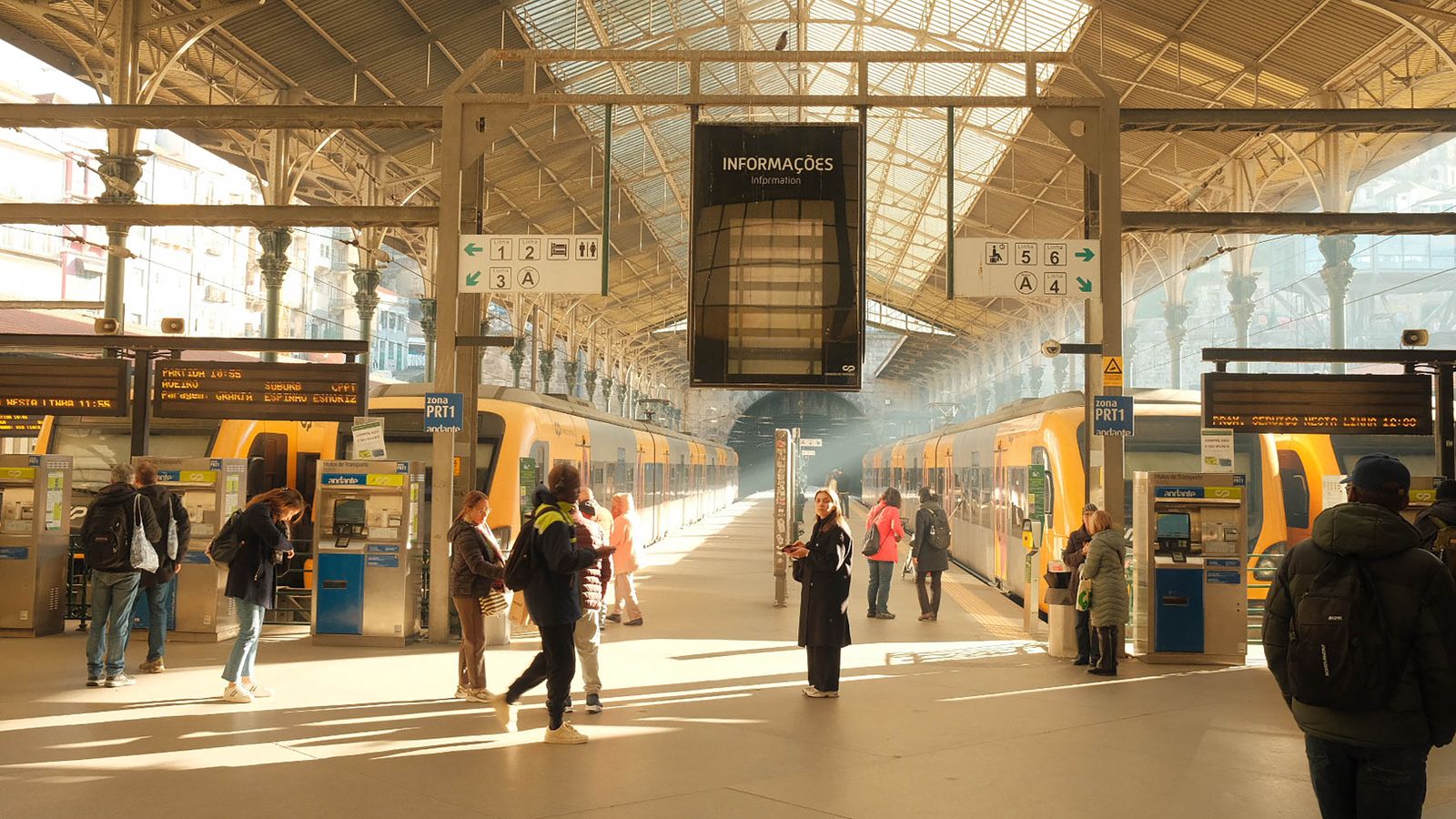
When is the best time to see the hall?
There is no guaranteed quiet hour because train arrivals and tour groups change the flow throughout the day. If your aim is a calmer look, avoid treating the central floor as a photo set during commuter and group-tour peaks. A 15-minute flexible stop is often enough to wait for a clearer view.
Check the day’s station operating conditions if you plan a very early or late visit. The hall is not a museum with a fixed standalone attraction schedule; it is part of a transport building. See nearby stops in the Porto itinerary.
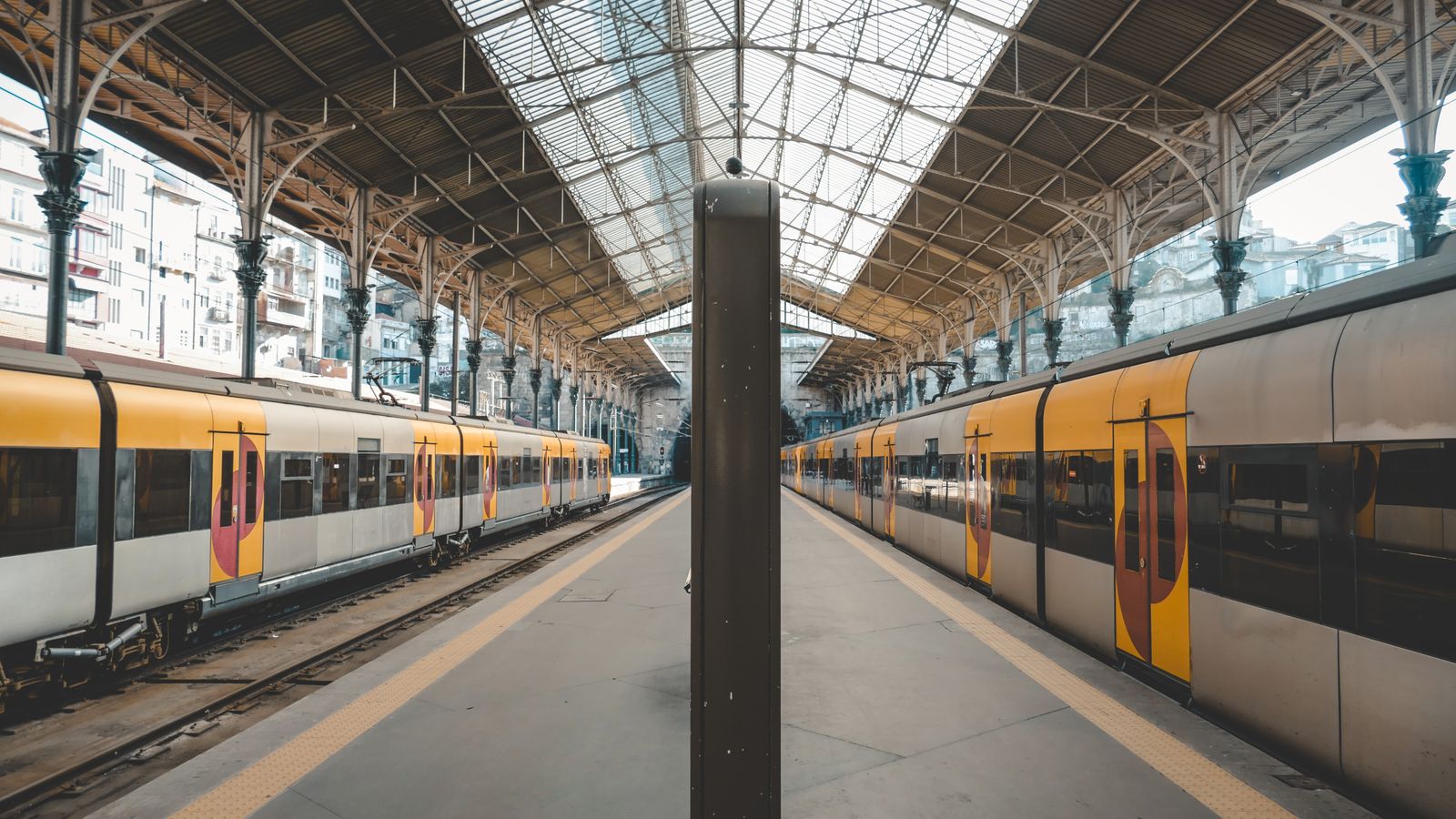
What should you visit next?
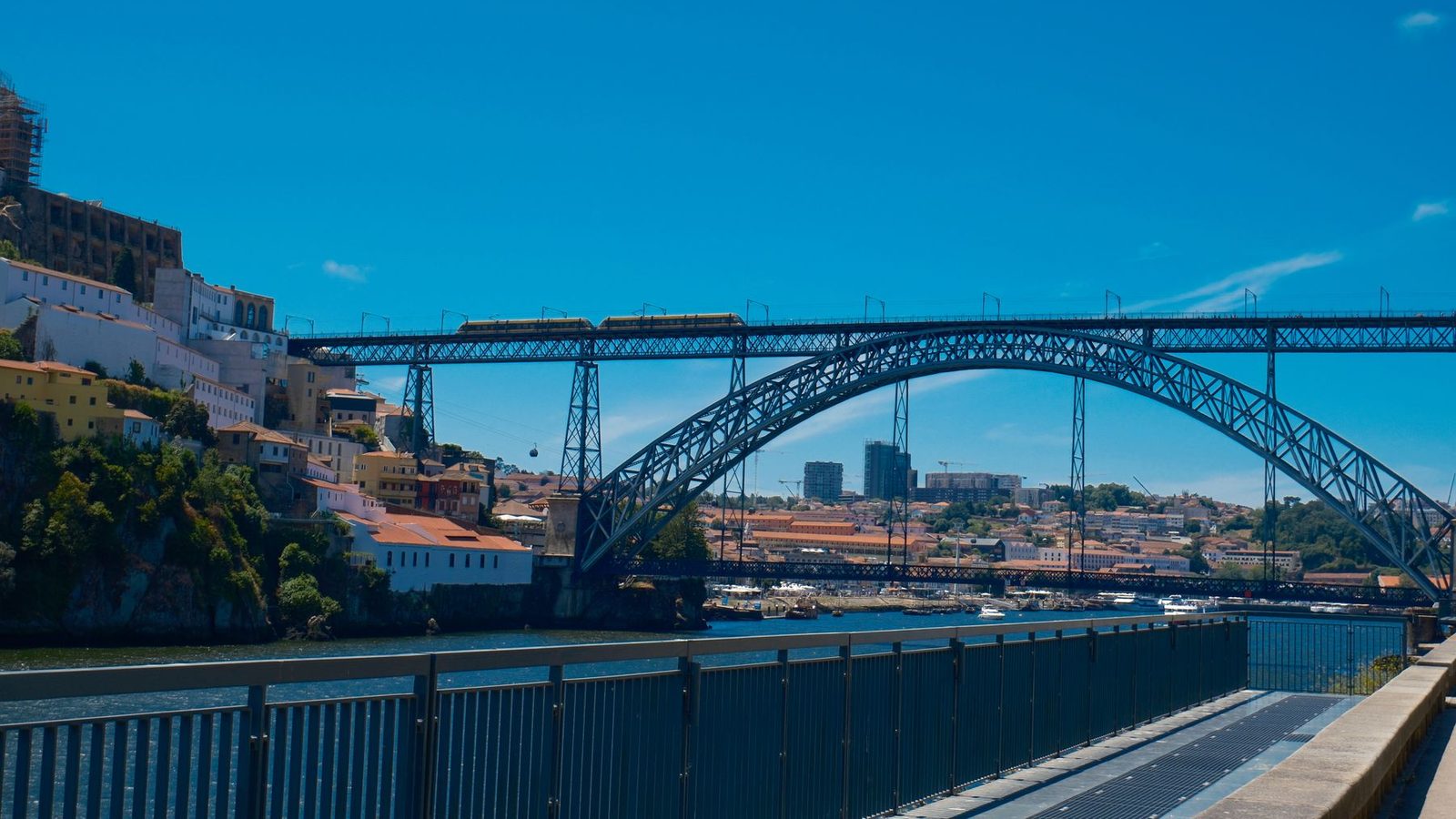
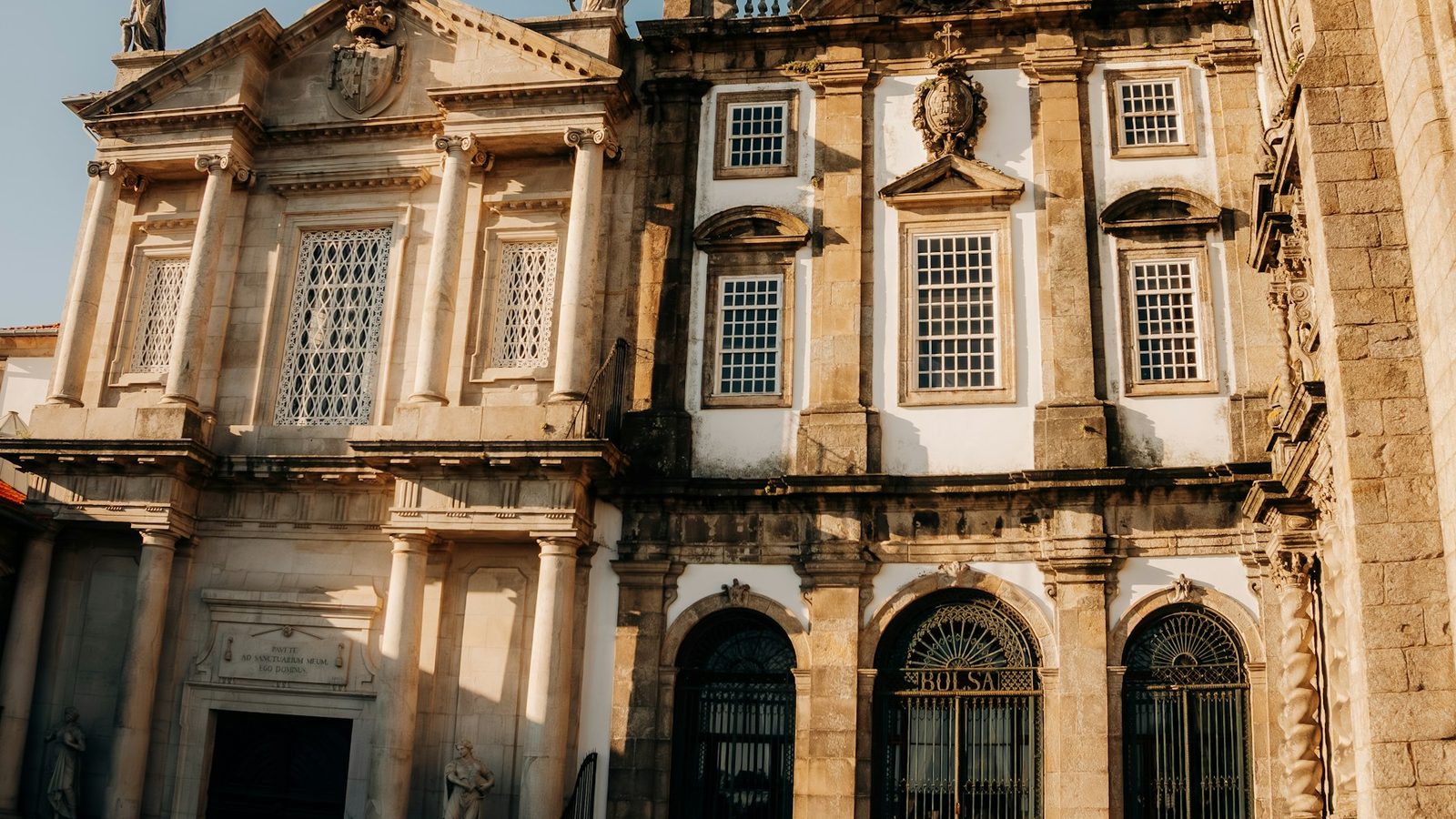
São Bento works as the hinge between the upper and lower city. Walk uphill to Porto Cathedral and the upper Luís I Bridge, or go west via Rua das Flores toward Palácio da Bolsa and Ribeira. The second route descends toward the river, which can make it easier than repeating the hill in both directions.
If you are using the station as a transport stop with luggage, avoid dragging cases through a long sightseeing circuit first. Confirm your platform or luggage plan, then enjoy the hall without a time pressure created by a departure. See Porto Cathedral visiting guide, Palácio da Bolsa guided-tour guide and Ribeira neighbourhood guide.
Is São Bento worth a stop?
Yes. It takes little time, costs no separate attraction fee for the hall and sits naturally on a central walking route. The only mistake is treating it as a static museum and getting in the way of people catching trains.
If you have 15 minutes between nearby stops, go inside and look around. If you have a train to catch, prioritise your platform first and see the tiles on the way out.
Useful answers
FAQ - Sao bento station Porto
No separate attraction ticket is normally needed to enter the working station hall. Rail travel, of course, requires the appropriate train ticket.