

A car is useful for northern Portugal and often inconvenient inside central Porto.
The historic centre combines steep streets, restricted access, one-way systems and limited curb space. A proper car park is normally worth the cost.
Where should visitors park in Porto?
Choose a car park based on the direction you arrive from and what you plan to visit, not simply the smallest map distance.
Official municipal options include Praça de Lisboa, Palácio da Justiça, Palácio de Cristal, Poveiros, Silo Auto, Duque de Loulé, Trindade, Alfândega and the Campanhã Intermodal Terminal.
- ✓ Praça de Lisboa: Clérigos and upper historic centre
- ✓ Poveiros: eastern Baixa and Coliseu
- ✓ Trindade or Silo Auto: Aliados and metro connections
- ✓ Alfândega: riverside and Miragaia
- ✓ Campanhã: park before entering the centre
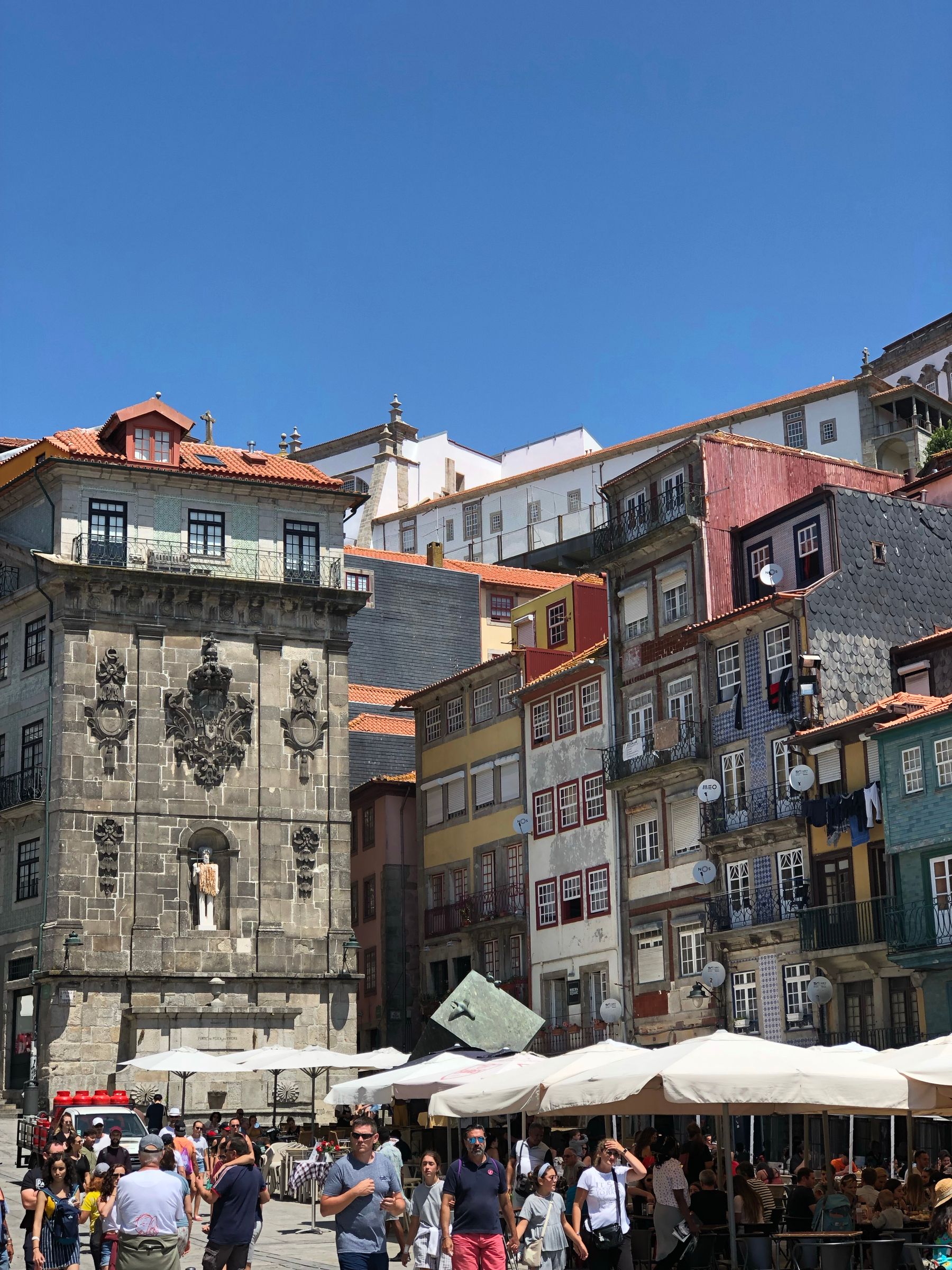
Parking near Ribeira
Ribeira is one of the least pleasant parts of Porto to search for street parking. The riverfront is busy, access routes are narrow and a nearby parking space may still involve steep walking.
Use a signed car park and check its closing time. For luggage, confirm the hotel's vehicle-access instructions before arrival rather than navigating directly to the front door.
Street parking and restricted areas
Paid street zones, resident spaces, loading areas and access restrictions can sit close together. Read the sign for the exact bay rather than copying the behaviour of the nearest parked car.
Rules and operating hours can change. Use the current municipal mobility information and the payment method indicated at the location.
Ask the hotel before driving into the centre
A hotel listing that says parking may refer to a nearby public garage, a paid partner car park or a small private facility requiring reservation.
Ask for the correct arrival route, vehicle-height limit, daily price and whether you can stop outside with luggage. This matters especially in Ribeira, Vitória and the oldest streets around Sé.
When park-and-ride makes more sense
If the car is only needed before or after Porto, leave it at your accommodation or a transport-connected car park and use metro, bus or walking in the centre.
Campanhã can be practical when approaching from the east. Other outer metro areas may suit a day visitor, but check the car park's current rules and last return service.
Do you need a car in Porto?
Not for a normal city break. Porto's central sights are compact, public transport reaches the airport and taxis cover awkward late-night or luggage journeys.
Rent a car when leaving for the Douro, Minho, Peneda-Gerês or a wider road trip. Collecting it on departure day avoids paying to store it in the city.
Useful answers
FAQ - Parking in Porto
It can be difficult in the historic centre. A signed public car park is normally easier than looking for a curb space.


